The NBA never truly sleeps, and this latest shockwave proves it once again. According to league sources, the Dallas Mavericks have agreed to trade Anthony Davis to the Washington Wizards, a move that instantly reshapes the competitive landscape for both franchises. While blockbuster trades are nothing new in the modern NBA, this one lands with particular weight, given Davis’s stature as a perennial All-Star and the contrasting directions of the two teams involved.
For Dallas, parting ways with a superstar of Davis’s caliber signals a strategic pivot rather than a simple roster tweak. The Mavericks have spent recent seasons searching for the perfect balance between star power and long-term flexibility. Injuries, salary cap pressure, and playoff inconsistencies have all played a role in pushing the front office toward a bold decision. Trading Davis suggests that Dallas is prioritizing depth, durability, and future assets over relying on a single high-usage big man.
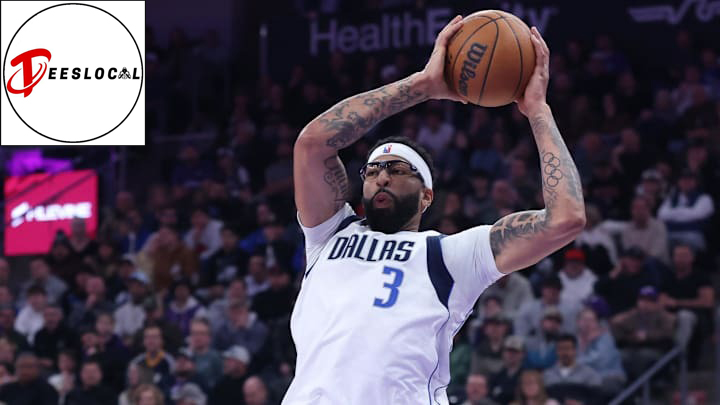
Washington, on the other hand, appears ready to gamble. The Wizards have long hovered in the gray area between rebuilding and contending, often lacking a true franchise-defining presence. By acquiring Anthony Davis, they are making a clear statement: this is a team willing to accelerate its timeline. Davis brings instant credibility, defensive dominance, and offensive versatility, qualities that Washington has struggled to anchor around in recent years. Whether this move marks the beginning of a new era or simply a high-risk experiment will depend on how the pieces fit once the dust settles.
Why Dallas Chose a Different Path
From the outside, trading away a player like Anthony Davis can look counterintuitive. When healthy, he remains one of the league’s most impactful two-way forces, capable of anchoring a defense while delivering elite scoring in the paint and from mid-range. However, context matters, and Dallas’s decision reflects a broader calculation about sustainability and team identity.
Health has been the elephant in the room throughout Davis’s career. While his talent is unquestioned, availability has often dictated his value on the court. For a franchise aiming to build consistency, recurring injury concerns can become an unavoidable liability. Dallas has felt this pressure acutely, especially in seasons where playoff hopes hinged on whether key players could stay upright through a grueling schedule.
Financial flexibility also plays a critical role. Davis’s contract occupies a significant portion of the salary cap, limiting the Mavericks’ ability to adapt quickly. By moving him, Dallas opens avenues to retool around a more balanced roster. Depth, versatile defenders, and complementary scorers may not generate the same headlines, but they often determine postseason success. This trade hints at a front office that is thinking less about splash and more about structural stability.
There is also a philosophical element at play. The Mavericks have experimented with different roster constructions over the past few years, sometimes leaning heavily on star-driven models. Trading Davis could signal a shift toward a more fluid system, one less dependent on any single player. In an era where chemistry, spacing, and adaptability are paramount, Dallas may believe that spreading responsibility across multiple contributors offers a higher ceiling than relying on one superstar whose health is never guaranteed.
What Anthony Davis Means for Washington
For Washington, acquiring Anthony Davis is nothing short of transformative. The Wizards have often found themselves overshadowed in the Eastern Conference, lacking the kind of marquee talent that draws national attention and shifts defensive game plans. Davis changes that equation immediately.
On the court, his impact is multifaceted. Defensively, he provides rim protection and switchability that few big men can match. His presence alone alters how opponents attack the paint, often forcing teams to settle for lower-percentage shots. Offensively, Davis offers flexibility, capable of thriving as a post scorer, pick-and-roll finisher, or even a face-up threat. This versatility gives Washington’s coaching staff a rare luxury: the ability to build schemes around a player who can adapt rather than dictate rigid structures.
Beyond tactics, there is a cultural ripple effect. A player of Davis’s pedigree elevates expectations. Younger players gain a reference point for preparation and professionalism, while veterans are pushed to match a higher competitive standard. For a franchise seeking identity, that influence can be just as valuable as points and rebounds.
Still, the risk is undeniable. Washington must manage Davis carefully to maximize his availability. Depth, load management, and smart rotations will be crucial. If the Wizards can strike that balance, this trade could redefine their trajectory in the East. If not, they may find themselves burdened by the same challenges that prompted Dallas to move on in the first place.
A Trade That Redefines Two Futures
Ultimately, this trade is less about winners and losers in the immediate sense and more about contrasting philosophies. Dallas is betting on flexibility, durability, and a longer view of success. Washington is embracing ambition, choosing to chase relevance and contention by anchoring their future to a proven star.
The NBA thrives on these moments of divergence. Trades like this force teams to confront their identities and commit to a direction, even when the outcome is uncertain. For fans, it offers intrigue, debate, and a fresh set of storylines to follow as the season unfolds.
Whether this deal becomes a masterstroke or a cautionary tale will only be clear with time. What is certain is that the ripple effects will be felt well beyond Dallas and Washington. In a league defined by movement and momentum, the Anthony Davis trade serves as a reminder that bold decisions are often the ones that shape eras.
Turn Headlines into Wearable Statements → https://teeslocal.com/